Double bookings and no-shows
When reservations arrive through calls, messengers and a spreadsheet, slots collide and people forget. Every no-show is an empty spot you can't resell.
OXIOS handles booking app development for gyms, studios, venues and service businesses, and travel app development for tour creators and destinations. We build calendars and reservations that don't double-book, offline maps and audio guides that work without signal, and notifications that bring people back on time.
When reservations arrive through calls, messengers and a spreadsheet, slots collide and people forget. Every no-show is an empty spot you can't resell.
Trainers get sick, classes move, venues close for holidays. The schedule has to update everywhere at once, and every affected customer needs to know.
Travellers are often abroad, in the mountains or in old city centres with weak coverage and expensive roaming. A travel app that needs the internet fails exactly when it's opened.
Customers have questions and providers need to confirm details. Without chat inside the app, conversations move to personal messengers and the booking history gets lost.
Venues, services or tours with filters, map search and real-time availability, so customers see only the options they can actually book.
Class schedules and time slots with capacity limits, waiting lists and cancellation rules, enforced on the server so two people can't take the same spot.
Push confirmations, reminders before a visit or tour, and instant alerts when a schedule changes, sent through Firebase.
Chat between customers and trainers, guides or providers, linked to the booking so everyone sees the context.
Downloadable routes and content, an audio guide that keeps playing on a locked screen, and route sharing with friends.
A web panel or Telegram bot where providers manage schedules, bookings and customers, plus an admin panel for content and support.
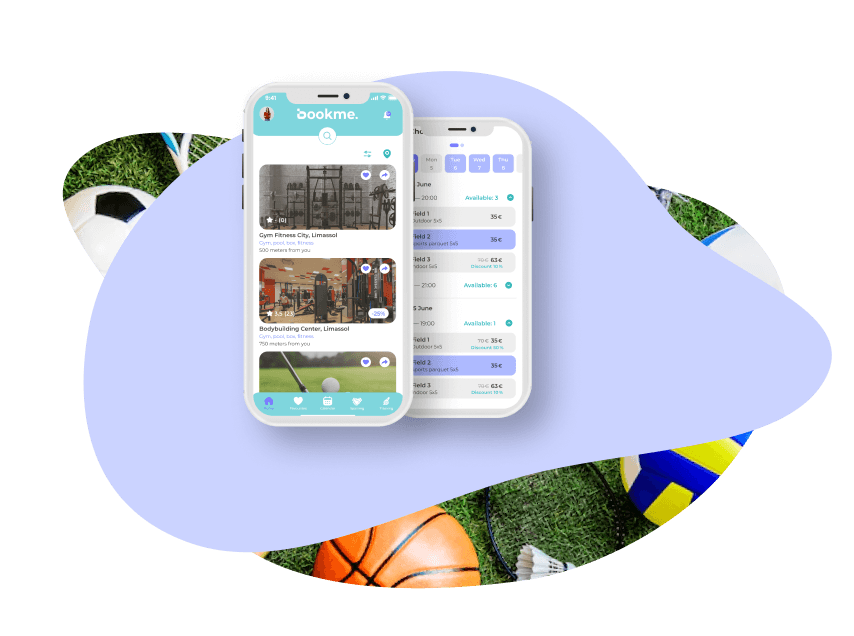
A booking app for sports venues: browse gyms, see the class calendar, reserve a spot and chat with trainers.
Open case study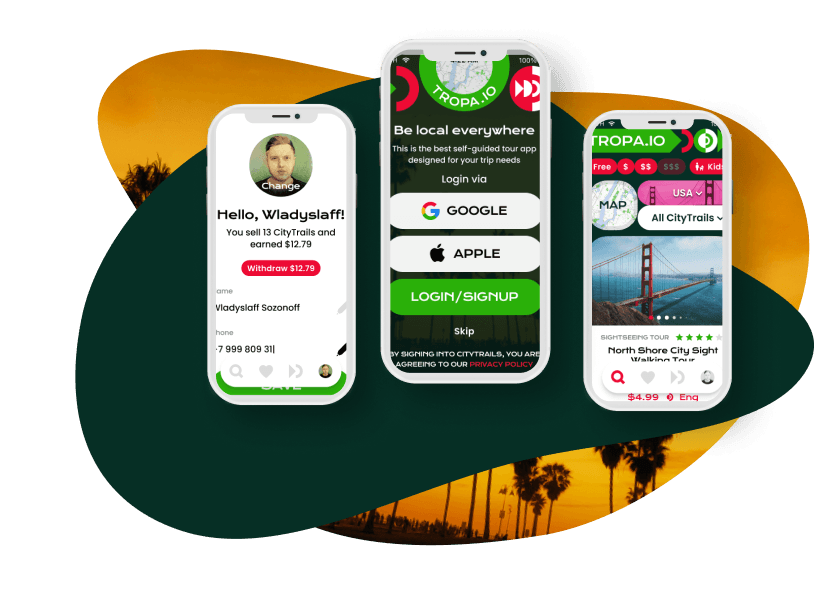
A self-guided tour app with shareable routes, offline maps and an audio guide that plays with the screen locked.
Open case study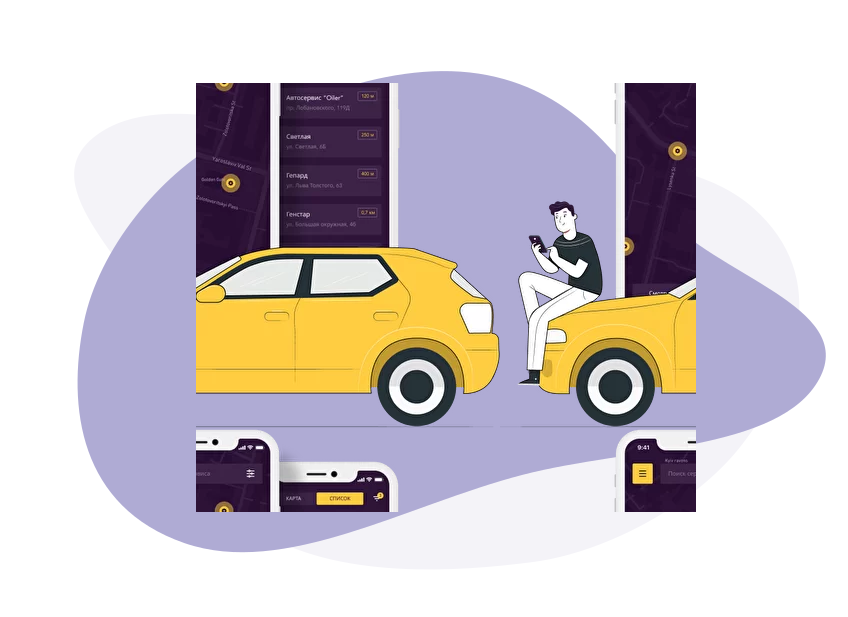
All car service stations in Kharkiv and Kyiv in your pocket — map search, booking and tools for service owners.
Open case studyBooking app development comes down to one promise: the slot a customer sees is really available. In BookMe, a booking app for gyms and sports venues, users browse a venue catalog, check the class calendar, reserve a spot and chat with trainers. Behind the calendar sit capacity limits, cancellation windows and notifications for every change, so the venue and the customer always see the same schedule.
Travel app development has a different enemy: the lack of connectivity. Tropa is a self-guided tour app where routes work offline and the audio guide keeps playing on a locked screen, so travellers can walk with the phone in their pocket. Users can also share routes with friends. Doing this well means planning downloads, storage size and background audio on both iOS and Android from the start, because each platform handles them differently. We also test on older, cheaper phones with little free storage, since that is what many travellers carry.
Every booking product has a second user: the provider. In Garage, a car-service marketplace, customers book through a mobile app with map search and push notifications, while service owners manage requests through a web admin panel and a Telegram bot, tools they already use every day. We look for the lightest tool that providers will actually open; a perfect dashboard that nobody checks is worse than a simple bot that everyone answers.
We build booking and travel apps with React Native, so iOS and Android share one codebase, and a Node.js backend for schedules, payments and notifications. A sensible MVP covers the catalog, the booking or route flow and notifications; payments, loyalty and reviews follow once you see how people use the product. Development runs in two-week sprints with a demo after each one. Tell us about your product: we'll reply within one business day and prepare a free estimate with scope, timeline, team and budget range.
As of 2026, a booking MVP with a mobile app, a provider panel and notifications typically costs approximately $30,000–$80,000. A travel app with offline routes and audio guides falls into a similar range, depending on how much content and map functionality it needs. Online payments, integrations with existing booking systems and several languages add to the budget. Our free estimate gives a range for your scope.
The server is the single source of truth for availability. A slot is reserved in one database transaction, so two people can't take it at the same moment, and a short hold protects it while the customer completes payment. If you also use external calendars, we sync them in both directions and flag conflicts for the provider instead of silently overwriting them.
Yes, for content downloaded in advance: maps, routes, audio and texts. Offline map tiles take storage space, so we let users download only the areas they need and check the map provider's licence terms for offline use. Booking and payments still need a connection, so the app saves the user's actions and syncs them as soon as the phone is back online.
Yes. For physical services such as classes, venues or tours we use card payments through providers like Stripe, including deposits and cancellation fees. Digital content, for example a paid audio tour that opens inside the app, usually has to be sold through App Store and Google Play in-app purchases under their rules. We plan the right payment type for each product during discovery.
If the system offers an API or calendar sync, yes. During discovery we review its documentation, check what data we can read and write, and estimate the integration separately. Often the best option is to keep your current system as the back office and build a better customer app connected to it, so staff don't have to change their daily tools.
Cross-platform iOS and Android apps on React Native and Expo: one codebase, native modules where needed, and honest advice on when native is better.
Learn moreiOS and Android apps on React Native and Expo: design, backend, App Store and Google Play release, push, subscriptions and support after launch.
Learn moreUI/UX design for mobile apps and web products: research, user flows, wireframes, Figma prototypes, design systems and accessible interfaces.
Learn moreTell us what you want to build. Within one business day we reply with a recommended scope, rough timeline, team shape and budget range.