One backend for every client
The web app, the iOS and Android apps and the admin panel all use the same API, so business rules live in one place and stay consistent.
OXIOS provides API development and integration services: we design and build the backend your web or mobile app runs on and connect it to payments, maps, messengers, CRMs and other third-party services. Every API comes with OpenAPI documentation, so your team and partners can work with it.
The web app, the iOS and Android apps and the admin panel all use the same API, so business rules live in one place and stay consistent.
Swagger/OpenAPI documentation is maintained alongside the code. Frontend developers, partners and future contractors don't have to guess how an endpoint works.
Authentication, role-based access, input validation, rate limiting and secrets management are part of the design, not a checklist at the end.
Webhooks are verified, retries and logs are in place, and failures trigger alerts, so a payment or CRM sync problem is visible before customers notice it.
Node.js and Express backends with TypeScript and MongoDB or PostgreSQL, structured for web and mobile clients and documented in OpenAPI.
Email and phone sign-in, JWT sessions with refresh tokens, Sign in with Apple and Google, roles and permissions.
Stripe checkout and subscriptions, App Store and Google Play purchase validation, webhooks, refunds and invoicing logic.
Firebase push, cron jobs and scheduled tasks for reminders, digests, recurring events and data cleanup.
Location tracking, geofences, routes and live updates over WebSockets for logistics, delivery and IoT devices.
Telegram bots for orders and notifications, CRM and ERP sync, email and SMS services, analytics and other third-party APIs.
We map the data, user roles, integrations and expected load, and agree on what the first version of the API must support.
The data model and the endpoint contract are written in OpenAPI before implementation, so web and mobile work can start in parallel.
Two-week sprints with daily syncs and a demo. Each endpoint ships with validation, tests and documentation.
Automated tests, integration tests against the sandbox environments of payment and other providers, and a review of access rules.
Production setup with logs, monitoring and backups, followed by ongoing support and new integrations.
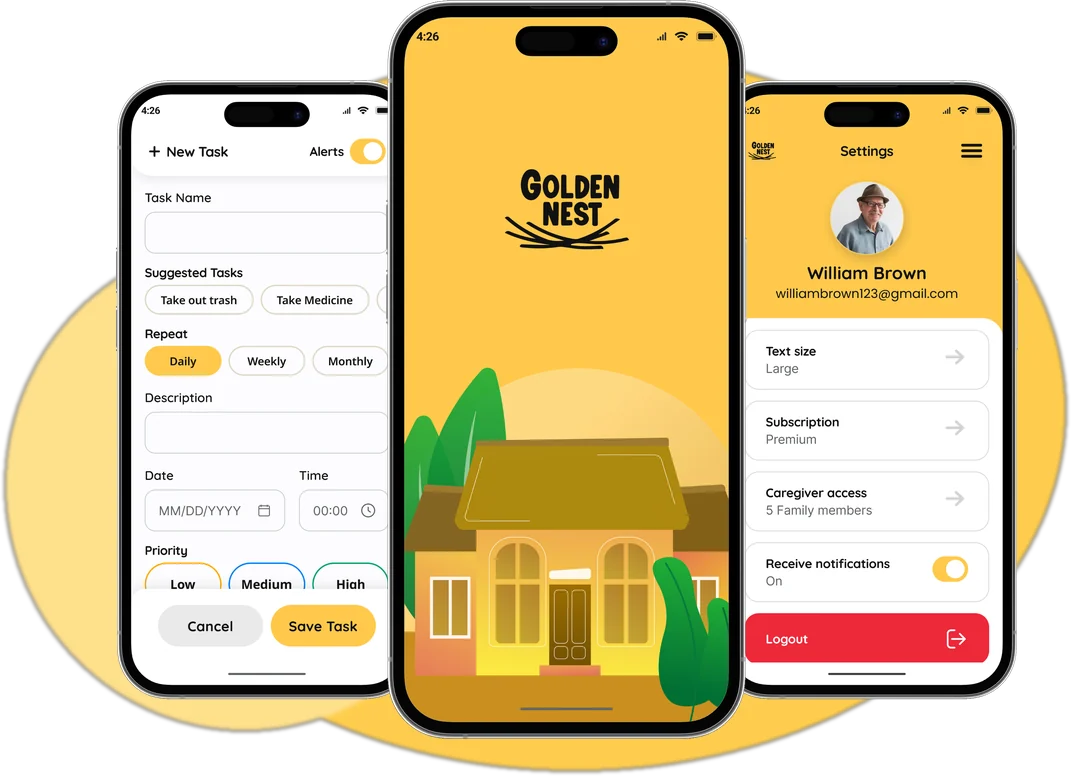
A daily companion app that helps seniors live independently — with reminders, home and garden guidance, and a Circle of Care for family.
Open case study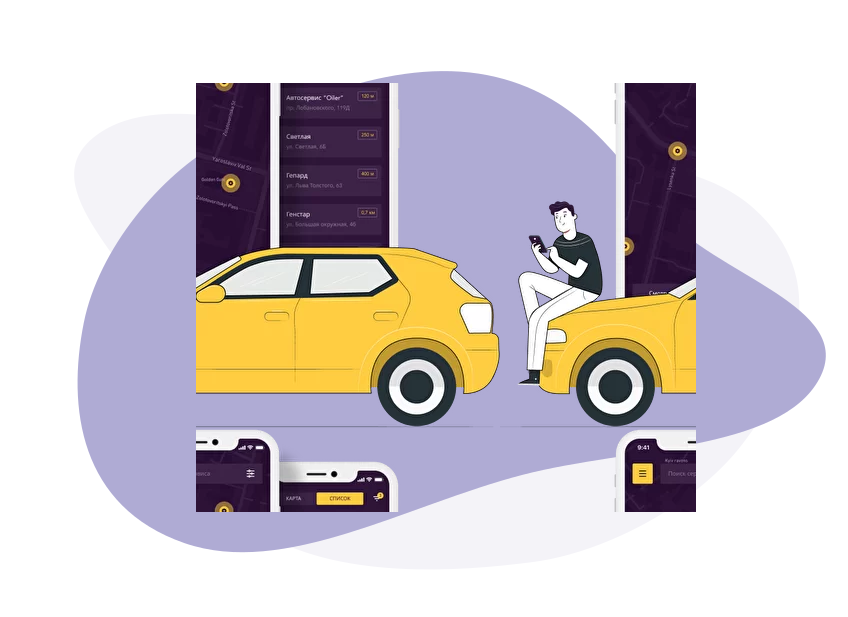
All car service stations in Kharkiv and Kyiv in your pocket — map search, booking and tools for service owners.
Open case study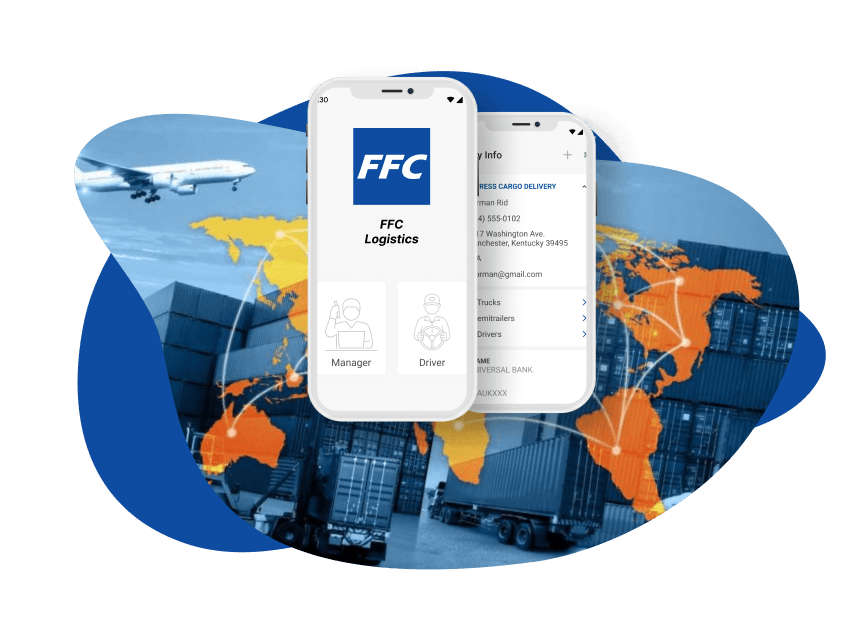
A freight transport app with real-time cargo tracking, order and document management and carrier chat.
Open case studyThe backend is the part of a product clients see least and depend on most. A good API makes the web and mobile apps simpler, keeps business rules in one place and lets you add a new client, such as a partner integration, a second app or a Telegram bot, without rewriting the server. Our API development therefore starts with the data model and the contract: which entities exist, who can read or change them and what each client needs to receive.
We usually build on Node.js and Express with TypeScript, using PostgreSQL for relational data and reporting or MongoDB for flexible documents. Endpoints are described in OpenAPI and published as Swagger documentation. Authentication uses short-lived JWT access tokens with refresh tokens, plus Sign in with Apple and Google where users expect them. Sensitive data is encrypted, secrets stay out of the code, and when you serve users in the EU we plan data storage and access rules around GDPR requirements.
Most of the complexity sits in integrations and background jobs. For Golden Nest we built a Node.js, Express and MongoDB backend with schedulers that send medication and task reminders with flexible repeats, push notifications, and subscriptions through both Stripe and in-app purchases. In Garage, a car-service marketplace, the backend serves the mobile app, the web admin panel and a Telegram bot for service owners. FFC Logistics relies on real-time GPS cargo tracking, order and document management and chat with carriers. More on this kind of work is on our logistics page.
If you already have a backend, we can audit it, document it and extend it, or move it step by step to a cleaner structure without stopping the product. We also set up the infrastructure around the API: separate staging and production environments, automated backups, searchable logs and alerts when error rates rise. Want to know what your integrations will take? Describe your project and we will reply within one business day with a recommended scope and a budget range.
Designing the data model and endpoints, implementing business logic, authentication and permissions, connecting databases and third-party services, writing tests and OpenAPI documentation, and deploying with logging and monitoring. For mobile and web products we usually also build the admin panel that works on top of the same API, so your team can manage data without a developer.
We use REST with OpenAPI documentation by default: it's simple to cache, easy for partners to integrate and well supported by tools. GraphQL can make sense when many different clients need flexible queries over complex, related data. We choose based on your clients and your data, and explain the trade-off at the estimate stage.
Yes. We integrate payments (Stripe, App Store and Google Play purchases, PayPal), push notifications, maps and GPS, Telegram bots, email and SMS providers and CRMs. Integration work includes webhook handling, retries, logging and a test run in the provider's sandbox before going live, so failures are visible and can be recovered.
We use short-lived tokens with refresh rotation, role-based access checks on every endpoint, input validation, rate limiting, HTTPS everywhere and secrets kept out of the codebase. Personal data is stored with access rules planned around requirements such as GDPR. Before release we review access rules and check for the common vulnerabilities described in the OWASP API Security Top 10.
Yes. We start with a review of the code, database and infrastructure, document what exists in OpenAPI and list the risks by priority. Then we either extend the current backend or replace parts of it gradually, keeping the API compatible so your apps keep working while the changes are made.
A backend for an MVP with accounts, a few core entities, an admin panel and one or two integrations typically takes around 1–3 months, built alongside the app. Complex payment flows, real-time features or many integrations add time. Because the API contract is agreed first, web and mobile development run in parallel instead of waiting for the backend.
Freight, delivery and transportation software: GPS cargo tracking, orders and documents, carrier chat, driver and courier apps.
Learn moreCompanion apps for connected devices and GPS trackers: live location, geofences, device messaging, admin panels and product websites.
Learn moreTwo-sided marketplaces for services and goods: onboarding for both sides, catalog and search, booking, payments and payouts, ratings, moderation.
Learn moreTell us what you want to build. Within one business day we reply with a recommended scope, rough timeline, team shape and budget range.