A scope you can afford
We cut the feature list down to the scenario that proves your idea and move the rest to a roadmap instead of throwing it away.
OXIOS provides MVP development services for startups and new business lines: we help you decide what goes into version one, design and build it as a web or mobile app, launch it and improve it based on what real users do. The goal is to learn whether the idea works before the budget runs out.
We cut the feature list down to the scenario that proves your idea and move the rest to a roadmap instead of throwing it away.
The MVP is built on a production stack, React Native, Next.js and Node.js, so you can grow it instead of rewriting it after the first users arrive.
A demo every two weeks means you can show the product to users and investors long before the official launch.
The free estimate includes the recommended MVP scope, a rough timeline, team shape, budget range, risks and integrations.
Workshops to define the target user, the core problem, what v1 has to prove and which features can wait.
Figma prototypes for investor pitches and user interviews before development starts.
iOS and Android apps on React Native and Expo, published on the App Store and Google Play.
Web platforms on Next.js, including two-sided marketplaces with listings, bookings and payments.
A Node.js backend, Stripe or in-app purchases, Firebase push notifications and a simple admin panel for your team.
Event tracking set up around your key hypotheses, then sprints focused on what the data and user interviews show.
Goals, users, risks and technology. We agree on what v1 must prove and how you will measure it.
We go through the feature list together and sort each item into launch, next release or later.
User flows and a clickable prototype, ideally tested with a few potential users.
Two-week sprints with daily syncs, a demo and a retrospective. Priorities can shift as you learn.
Testing, store release or web deployment, with analytics and crash reporting in place from day one.
We review usage data and feedback with you and plan the next sprints around what users actually need.
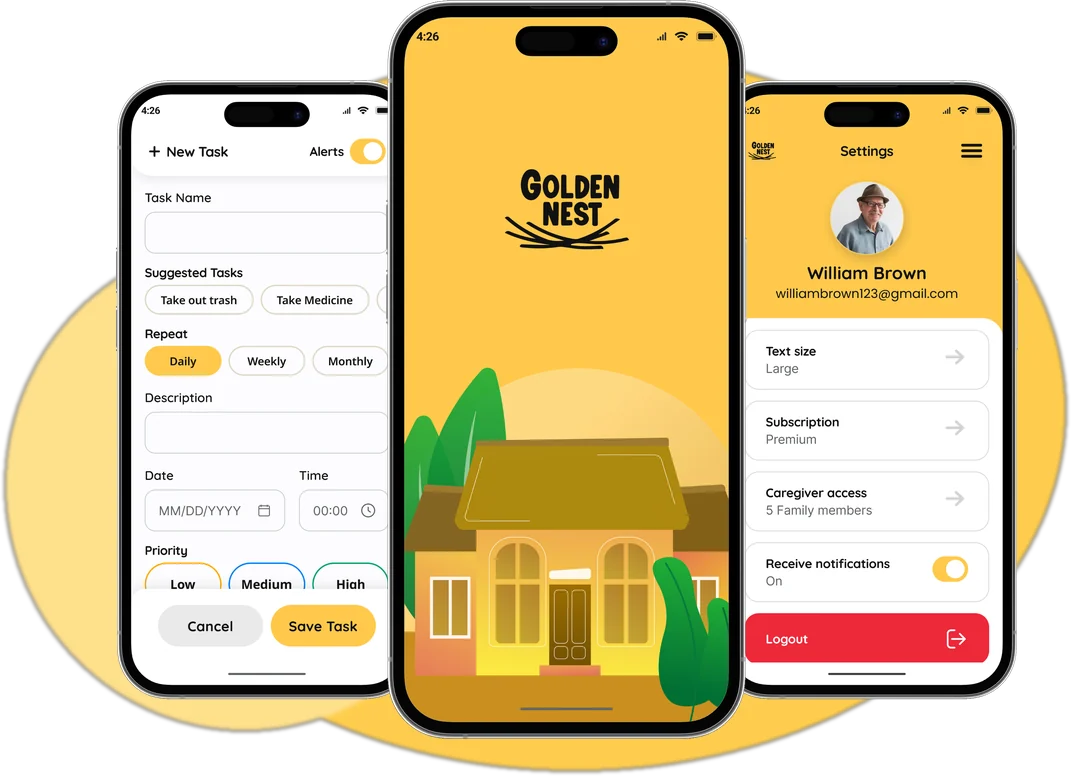
A daily companion app that helps seniors live independently — with reminders, home and garden guidance, and a Circle of Care for family.
Open case study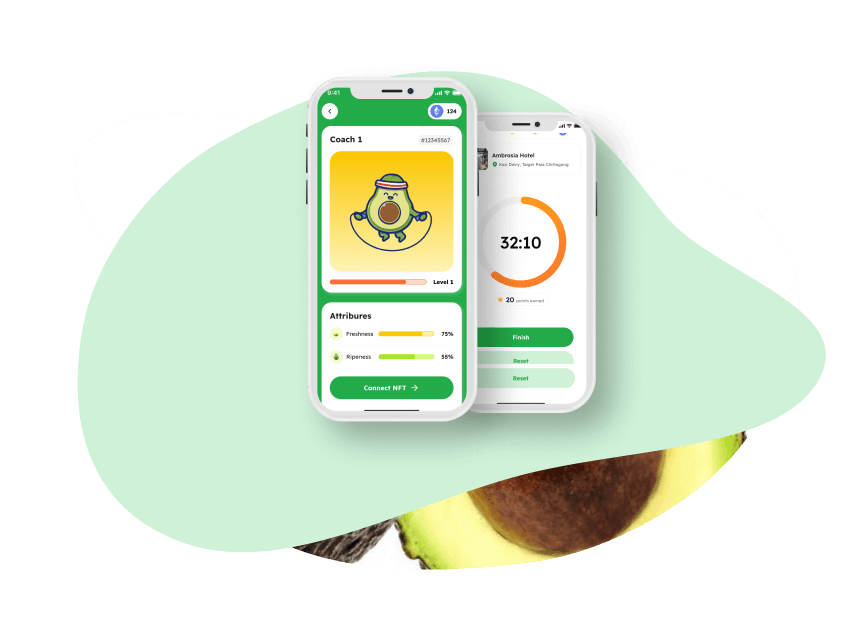
A mobile app that rewards healthy eating with cryptocurrency that can be spent at partner cafes.
Open case study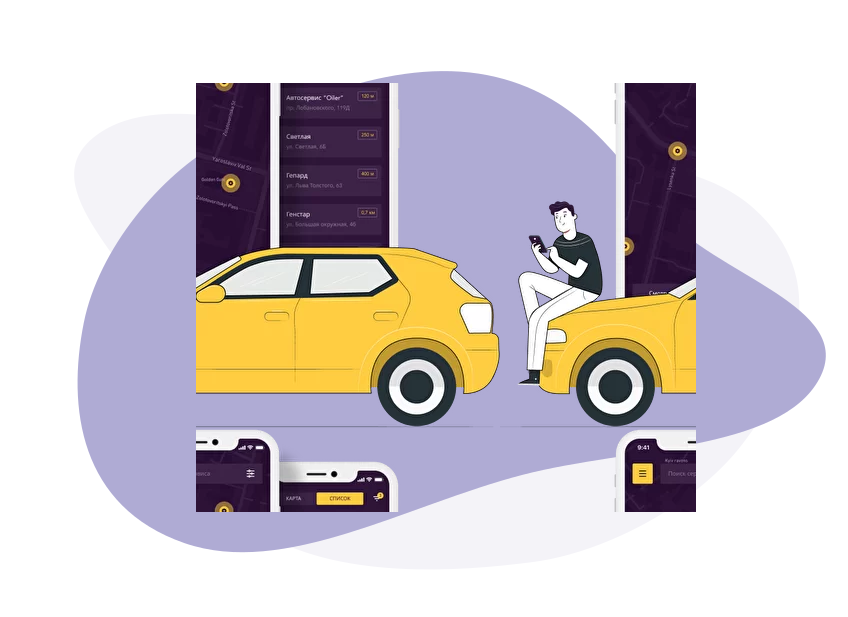
All car service stations in Kharkiv and Kyiv in your pocket — map search, booking and tools for service owners.
Open case studyAn MVP is not a smaller copy of the full product. It's the shortest path to an answer: will people use this, and will they pay for it? That's why MVP development for startups begins with a question, not a feature list. In discovery we define who the first users are, the one problem the product solves for them and what result after launch would tell you to keep going.
Then we cut the scope. Typical candidates to postpone are complex user roles, several payment methods, detailed settings, social features and a full admin panel where a simple one will do. What stays is the core scenario, done well, plus what you can't launch without: sign-in, payments if the business model depends on them, and basic analytics. As of 2026, a focused mobile or web MVP typically takes around 2–4 months from discovery to launch, while marketplaces and products with real-time features or several apps often take 4–6 months. Our MVP development guide walks through these decisions in more detail.
Our cases show the range. Golden Nest, an iOS and Android companion app for seniors, launched on both stores with medication and task reminders, a Node.js backend with push notifications, and subscriptions through Stripe and in-app purchases. Garage, a car-service marketplace for Kharkiv and Kyiv, combines map search, booking and push notifications in the app with a web admin panel and a Telegram bot for service owners; a bot is often a cheaper way to give the supply side tools than a separate app. Crypto Cado tested a new idea: rewarding healthy eating with crypto tokens spendable at partner cafes.
Launch is the middle of the project, not the end. After release we look at analytics and talk to users, then plan sprints around what they actually do. Sometimes that means building the next feature, sometimes removing one. If you have an idea and want to know what a realistic first version looks like, send us a short description. The estimate is free, and we reply within one business day.
It depends on the platform, the number of user roles, integrations and how polished the design needs to be. As of 2026, a focused MVP built by an outsourced team typically costs from the low tens of thousands of dollars for a simple single-platform product to considerably more for marketplaces or products with several apps. Our free estimate gives a budget range for your specific scope.
Typically around 2–4 months from discovery to launch for a focused web or mobile MVP. Marketplaces, products with real-time features or several apps, for example a customer app plus a staff app, often take 4–6 months. The biggest factor is scope: every feature added to v1 adds design, development and testing time.
The core scenario that proves your idea, plus what you can't launch without: sign-up, the main action, payments if your business model depends on them, basic analytics and an admin tool to manage data. Everything else, such as extra roles, advanced settings, social features and integrations nobody has asked for yet, goes into the roadmap.
A web MVP is often cheaper and faster to release, because there is no store review and one version works everywhere. A mobile MVP makes sense when the product relies on push notifications, location, the camera, offline use or daily habits. With React Native, a mobile MVP covers iOS and Android from one codebase, which narrows the cost gap.
Not if it's built on a production stack with a clean structure. We build MVPs on the same technologies we would use for a mature product, React Native, Next.js and Node.js, and keep any shortcuts deliberate and documented. Some parts may be reworked as the product grows, but you continue from the existing code instead of starting over.
Before development, we test a clickable prototype with potential users. After launch, analytics track the key actions behind your hypotheses, such as sign-ups, the first completed action, return visits and payments, and short user interviews explain the numbers. Each sprint after launch is planned around what this data shows.
HealthTech, AgeTech and medical education apps with clear UX, reliable reminders, caregiver access and privacy planned from day one.
Learn moreTwo-sided marketplaces for services and goods: onboarding for both sides, catalog and search, booking, payments and payouts, ratings, moderation.
Learn moreRestaurant, café and food delivery apps: digital menus, QR ordering, payments, staff and courier apps, stop lists and loyalty.
Learn moreTell us what you want to build. Within one business day we reply with a recommended scope, rough timeline, team shape and budget range.