Peak-hour pressure
Friday evening is when everything breaks: waiters can't reach every table, the kitchen loses track of orders and guests wait for the bill. Your software has to be fastest exactly when the load is highest.
OXIOS handles restaurant and food delivery app development for venues, chains and FoodTech startups. We build guest apps with digital menus and QR ordering, apps for waiters and couriers, and the backend that keeps orders, kitchen and payments in sync.
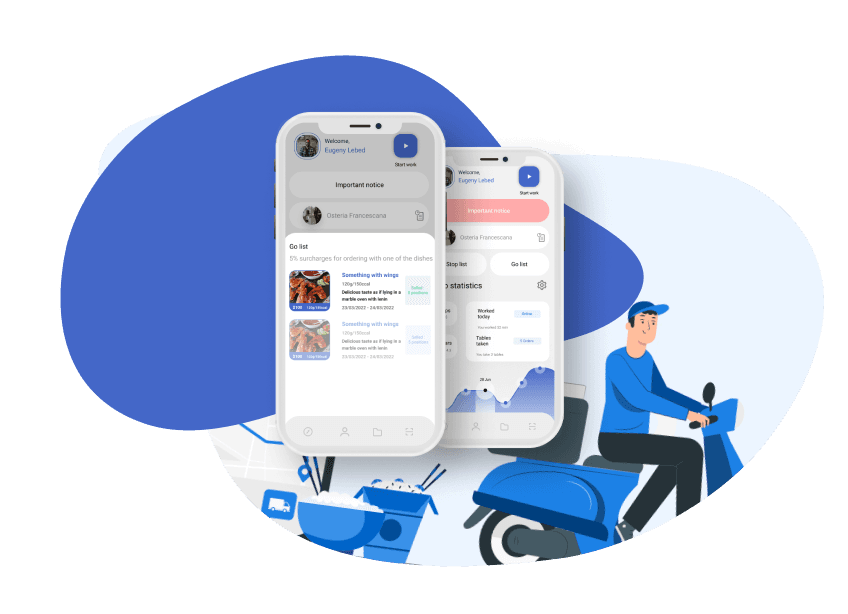
Friday evening is when everything breaks: waiters can't reach every table, the kitchen loses track of orders and guests wait for the bill. Your software has to be fastest exactly when the load is highest.
Delivery aggregators bring orders, but they take a commission and own the relationship with your guests. Many restaurants want their own ordering channel without hiring an in-house tech team.
A dish runs out, but the app keeps selling it. Without a live stop list connected to ordering, every missing ingredient turns into a refund and an unhappy guest.
Guests want to know where their order is; managers want to know which courier is free. Statuses, routes and handovers are hard to follow through phone calls and group chats.
Guests scan a QR code at the table, browse a menu with photos and modifiers, then order and pay by card without waiting for a waiter.
Card payments, split bills and tips through payment providers such as Stripe, with receipts and refunds managed from the admin panel.
Orders by table, statuses, the stop list and tips in one app, so the floor and the kitchen work from the same live data.
Order assignment, routes and statuses for couriers, and live delivery tracking for guests, all fed by the same order system.
Multi-restaurant delivery apps with search and reviews, plus a web dashboard where each owner manages menus, prices and incoming orders.
Bonuses, promo codes, push campaigns and reward mechanics that bring guests back, from simple points to token-based rewards for healthy choices.
Digital menus, QR ordering, card payments and delivery tracking — plus tools for waiters and couriers.
Open case study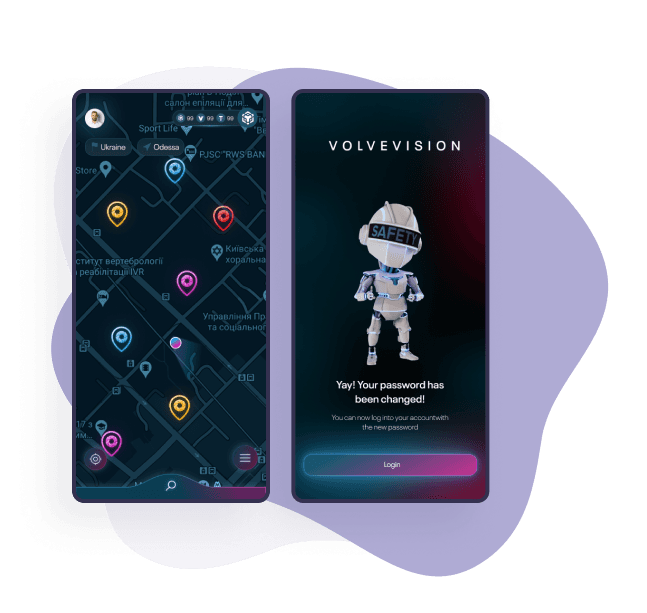
Food delivery from all restaurants in one app, with search, reviews and a web dashboard for restaurant owners.
Open case study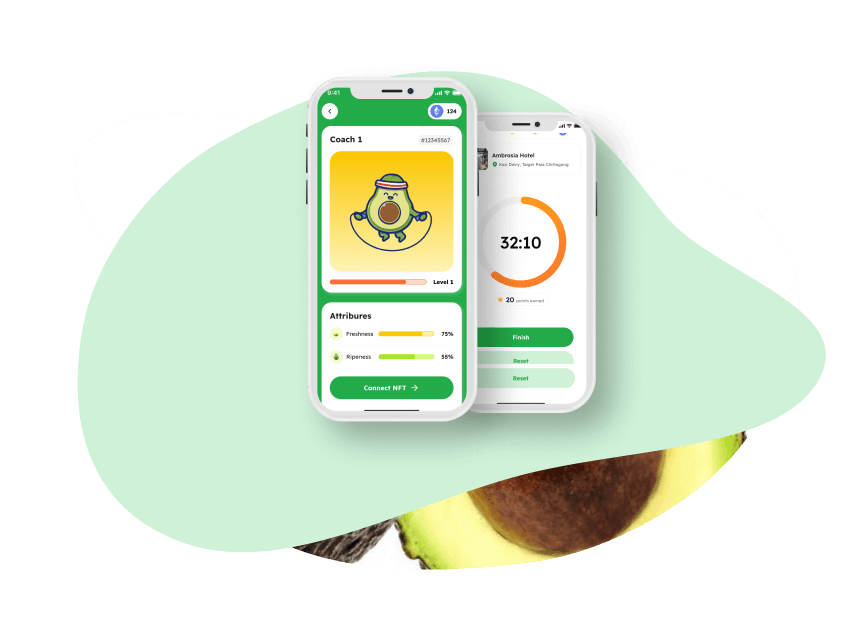
A mobile app that rewards healthy eating with cryptocurrency that can be spent at partner cafes.
Open case studyRestaurant and food delivery app development is really two products: one for guests and one for the people who serve them. QuickPay is a good example. Guests get a digital menu, QR ordering at the table, card payment and delivery tracking. Waiters and couriers get their own app with orders, the stop list, tables, tips and routes. Both sides read from one backend, so when the kitchen marks a dish as unavailable, guests stop seeing it.
If you plan a platform for many restaurants rather than one venue, the priorities shift to search, reviews and partner onboarding. In Vilka we combined a delivery app that aggregates restaurants with a web dashboard where restaurant owners manage their menus and orders themselves. Loyalty can also go beyond discount points: CryptoCado rewards users with crypto tokens for healthy eating, and they spend those tokens at partner cafes, which brings guests to the venues that join the programme.
Much of the effort in FoodTech hides in integrations: payment providers, POS and kitchen systems, delivery zones, maps, SMS and push notifications. We document APIs in Swagger/OpenAPI and plan for bad moments — a waiter's phone dropping Wi-Fi shouldn't lose an order, and a payment that times out shouldn't charge the guest twice. Mobile apps are built with React Native, so iOS and Android share one codebase and you pay for one team instead of two.
A sensible first release for a single restaurant is often QR ordering and payment at the table; for delivery, it is ordering plus courier statuses. Loyalty, analytics and multi-location features follow once you see how guests actually use the product. Work runs in two-week sprints with a demo after each one, so you can test new flows with your staff during a quiet shift. Send us your idea: we reply within one business day and then prepare a free estimate with scope, timeline, team and budget range.
As of 2026, an ordering MVP for one restaurant or chain typically costs approximately $20,000–$50,000. A full delivery platform with separate guest, courier and restaurant apps plus an admin panel usually starts around $60,000 and can exceed $150,000. The biggest cost drivers are the number of apps, payment flows, POS integration and real-time courier tracking. Our free estimate breaks this down for your scope.
Not always. Aggregators are good for reach and new guests. Your own app or QR ordering makes sense when you have many regulars, want to own guest data and loyalty, or pay significant commissions on repeat orders. Many restaurants keep both: aggregators for discovery, their own channel for in-venue ordering and returning customers.
Yes. A QR menu can open as a web app right in the browser, with no download, which is usually the better choice for ordering at the table. A native mobile app makes more sense for delivery, loyalty programmes and push notifications. Many projects combine both: a web menu for walk-in guests and a mobile app for regulars.
Usually, if the POS provides an API. During discovery we review its documentation, test access and estimate the integration as a separate item. If there is no API, we can make the staff app or a kitchen screen the source of truth for orders and sync totals with your accounting by export. Either way, the kitchen sees every order in one place.
We use established payment providers such as Stripe, with hosted payment forms or SDKs, so card numbers never touch your servers or ours. This keeps most card-security requirements on the provider's side. Beyond that, we build split bills, tips, refunds and receipts, and choose local payment methods based on the countries you operate in.
iOS and Android apps on React Native and Expo: design, backend, App Store and Google Play release, push, subscriptions and support after launch.
Learn moreCross-platform iOS and Android apps on React Native and Expo: one codebase, native modules where needed, and honest advice on when native is better.
Learn moreREST APIs and Node.js backends for web and mobile apps: auth, payments, push, maps, Telegram bots, CRM integrations and scheduled jobs.
Learn moreTell us what you want to build. Within one business day we reply with a recommended scope, rough timeline, team shape and budget range.